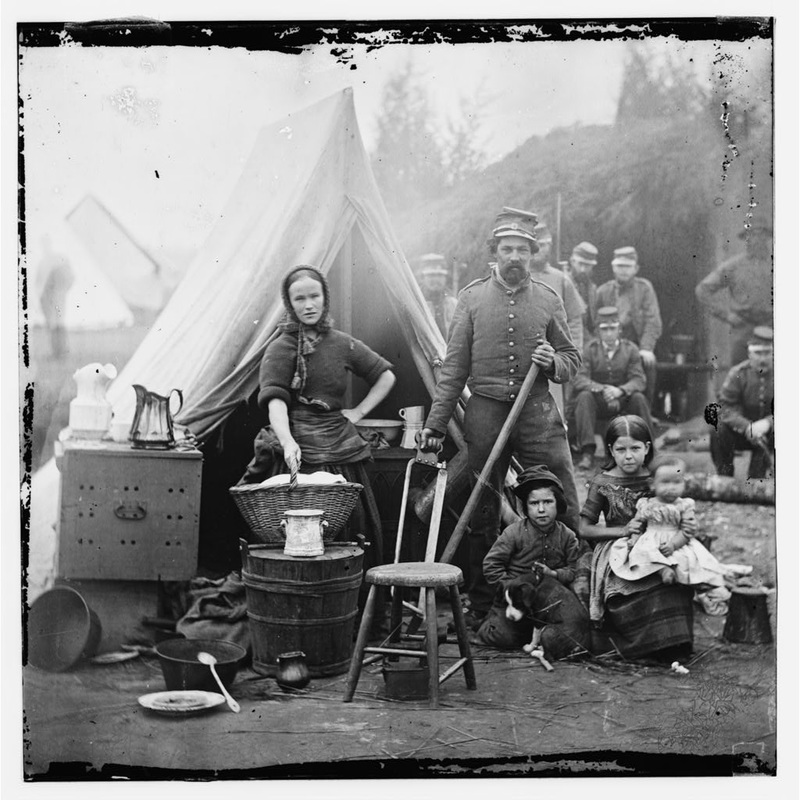
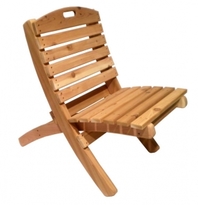
Period correct cookware is pretty easy to organize. The single biggest thing to avoid is speckled enamel ware shown below. Some documentation suggests that it did exist during the time period though it was quite rare and very expensive. Just about anything made of out cast iron is safe. Items like dutch ovens, cast iron skillets, and pots are all period correct and no will call you out for branding commonly found on them. When it comes to cups, plates, and bowls tin is always the safest way to go. There are many vendors who sell tin ware reasonably. However stainless steel items are much easier to come by for some people and if allowed to patina or cooked with over a fire, pass as tin to most people. Mrs. Koepp, one of our civilians, recommends finding pie tins from antique stores and thrift shops. Many of the older ones are made of tin and also come in stainless steel in shapes fairly common to period correct plate ware.
Eating utensils would be expected to be made of tin, silver, or wood. Forks were three tine and reproductions are quite cheap while originals can be found at antique stores for about $10-15 each. Spoons tended to be on the larger size than what most of us have in our drawers now as were the "butter" knives. Cheap silver plate silverware can be found usually in boxes at antique stores quite affordably and good be a good way to collect your spoons and knives though almost all the forks you'll find are four tine. Wooden spoons can be found most places quite inexpensively and work fine as long as they are not made of exotic materials like bamboo.
A civilian lady could expect to have some porcelain china ware. Items from the orient were quite celebrated and desired by most people. So inexpensive china inspired glassware would be acceptable, as well. Tea and coffee were consumed by just about everyone.
Pitchers and wash basins were very common and could be found in many varieties. With no running water the pitcher and basin was your bath. When looking to purchase one, a good rule of thumb is to look for ones with less color and design.
Eating utensils would be expected to be made of tin, silver, or wood. Forks were three tine and reproductions are quite cheap while originals can be found at antique stores for about $10-15 each. Spoons tended to be on the larger size than what most of us have in our drawers now as were the "butter" knives. Cheap silver plate silverware can be found usually in boxes at antique stores quite affordably and good be a good way to collect your spoons and knives though almost all the forks you'll find are four tine. Wooden spoons can be found most places quite inexpensively and work fine as long as they are not made of exotic materials like bamboo.
A civilian lady could expect to have some porcelain china ware. Items from the orient were quite celebrated and desired by most people. So inexpensive china inspired glassware would be acceptable, as well. Tea and coffee were consumed by just about everyone.
Pitchers and wash basins were very common and could be found in many varieties. With no running water the pitcher and basin was your bath. When looking to purchase one, a good rule of thumb is to look for ones with less color and design.
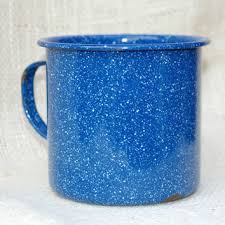
Just say NO to camp ware like this and it's other color variants. It is very much post war.